Wednesday, 9 November 2011

Monday, 7 November 2011
Doug Bihlmaier
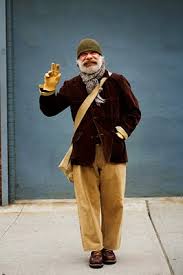
When we first saw this man, our first guess was a tramp, how he doesn't seem to care how he looks or have a care in the world.
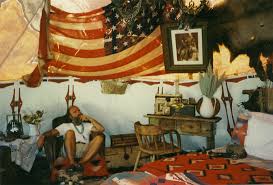
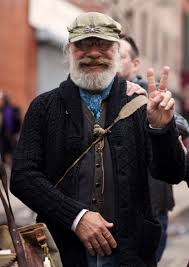
Doug Bihlmaier is the head of Ralph Lauren Vintage. He is seen is one of the most stylish men in New York. After a first look at this man to finding out what he really is shows the perfect example of not to judge a book by its cover. He dresses with an edge and his own style he describes as 'Hobo Chic' he does this to have a individual style and show he isn't afraid to be different.
Doug Bihlmaier is the head of Ralph Lauren Vintage. He is seen is one of the most stylish men in New York. After a first look at this man to finding out what he really is shows the perfect example of not to judge a book by its cover. He dresses with an edge and his own style he describes as 'Hobo Chic' he does this to have a individual style and show he isn't afraid to be different.

Friday, 4 November 2011
Working Title's Website
Working Title's is an interesting website as it has ads from all previous projects in the archives that go back years to lots of previous projects, which is interesting to see and see how they were advertised and teaser trailers from up coming projects. It also has a variety of games that are aimed at younger children that are interested in the films and the games have been made around the films. The website also shows a number of interviews with directors and actors which are interesting to watch and find out more about the films and the behind the scene information of the film. I think the website looks very professional for a small British film company and gives lots of interesting information about all films they produce on there and useful information about the company themselves.
Tuesday, 25 October 2011
Saturday, 22 October 2011
Vladimir Propp's Character Types
The Villain- Struggles with the hero
The Doner- Character who gives the hero something to help them on their quest
The Helper- Accompanies the hero on the quest
The Princess- Sought for character (usually a woman)
The Dispacher- Sends hero on the quest
The Hero- Goes on the quest
The False Hero- Claims to be hero/ acting like the hero
Boundin' Pixar Short
The Villain- Farmer
The Doner- Jackalope
The Helper- Jackalope
The Princess- Happiness/ Boundin'
The Dispacher- Jackalope
The Hero- Lamb
The False Hero- Lamb's Friends
Linear Narrative- Beggining Middle End
(Chronological order)
Non Linear- Non chronological
The Male Gaze & Facial Expressions
The concept of the gaze is one that deals with how an audience views the people presented.
For feminists it can be thought of in 3 different ways:
Laura Mulvey coined the term 'Male Gaze' in 1975. She believes that in film audiences have to 'view' characters from the perspective of a heterosexual male.
Features of the male gaze:
Some women enjoy being 'looked at'. The gaze can also be directed toward the members of the same gender for several reasons, not all of which are sexual, such as comparison of body image or clothing.
Categorising Facial Expressions
Women- Marjorie Ferguson
Chocolate Box
Seductive
'To gaze implies more than to look at- it signifies a psychological relationship of power in which the gazer is superior to the object of the gaze.'
For feminists it can be thought of in 3 different ways:
- How men look at women
- How women look at other women
- How women look at themselves
Laura Mulvey coined the term 'Male Gaze' in 1975. She believes that in film audiences have to 'view' characters from the perspective of a heterosexual male.
Features of the male gaze:
- Camera lingers on the curves of the female body, and events which occur to women are presented largely in the context of a man's reaction to these events.
- Relegates women to the status of objects. The female viewer must experience the narrative secondarily by identification with the male.
Some women enjoy being 'looked at'. The gaze can also be directed toward the members of the same gender for several reasons, not all of which are sexual, such as comparison of body image or clothing.
Categorising Facial Expressions
Women- Marjorie Ferguson
Chocolate Box
- Half/ full smile
- Lips together/ slightly parted
- Teeth barely visible
- Full/ three-quarters face to camera
- Emphasis on eyes
- Mouth shut with a hint of a smile
- Head to one side or looking back at the camera
- Full face
- Wide open, toothy smile
- Head thrust forward or thrown back
- Hair often wind blown
- Includes male/ female 'two-somes'
- Dreamy
- Heavy lidded
- Overtly sensual/ sexual
Seductive
- Similar to cool/ level
- Eyes less wide
- Expression is less reserved, but still self-confidant
- Milder
- Nymph like
- Active
- Healthy
- Vibrant
- Outdoor girl
- Often smiling/ grinning
- Concentrating
- Engaged in business in hand
- Mouth closed
- Eyes object directed
- Sometimes a slight frown
- Hair usually short style or tied back
- Deliberately ridiculous
- Exaggerated
- Acting the fool
- Pulling faces
- Neutral looks of a dummy, artificial, wax like
- Features may be in any position- but most likely eyes wide open and a smile
- Looks remain vacant and empty with personality removed
'To gaze implies more than to look at- it signifies a psychological relationship of power in which the gazer is superior to the object of the gaze.'
Friday, 21 October 2011
Narrative Codes
Roland Barthes
Roland Barthes was a semioligist; basically he was paid to look at 'texts' to decipher how they were put together. He has described it as like a ball of string, texts may be 'open' unravelled in lots of different ways or 'closed' when there is only one obvious thread to pull on.
Codes
Action code- Implies something is about to happen
Enigma code- Something in a story that makes you ask a question
Semantic code- When an object gives ideas about things that are associated with it in connotation
Cultural code- When you use the audience that have a shared body of knowledge.
Symbolic code- Binary opposites
Binary Opposites- Levi Straus
He believed that the world was split into a series of binary opposites. Essentially only one thing can be defined in relation to something it isn't.
Ideology
An organised collection of ideas. An ideology can be thought of as a comprehensive vision as a way of looking at things, a belief which helps explain the world around us.
Roland Barthes was a semioligist; basically he was paid to look at 'texts' to decipher how they were put together. He has described it as like a ball of string, texts may be 'open' unravelled in lots of different ways or 'closed' when there is only one obvious thread to pull on.
Codes
Action code- Implies something is about to happen
Enigma code- Something in a story that makes you ask a question
Semantic code- When an object gives ideas about things that are associated with it in connotation
Cultural code- When you use the audience that have a shared body of knowledge.
Symbolic code- Binary opposites
Binary Opposites- Levi Straus
He believed that the world was split into a series of binary opposites. Essentially only one thing can be defined in relation to something it isn't.
Ideology
An organised collection of ideas. An ideology can be thought of as a comprehensive vision as a way of looking at things, a belief which helps explain the world around us.
Subscribe to:
Posts (Atom)